As it is now 2023 I decided it was time to again check out this project once more. I knew it had been a while since I last published anything, but I didn’t realize just how long it had actually been.
Rather than go through all the effort of trying to write posts for every month that I missed and totally losing motivation to do anything, I thought it would be more fun for me to just find a few of the photos from last year that I really liked, and publish them instead. Much more instant gratification for myself that way.
Jellys
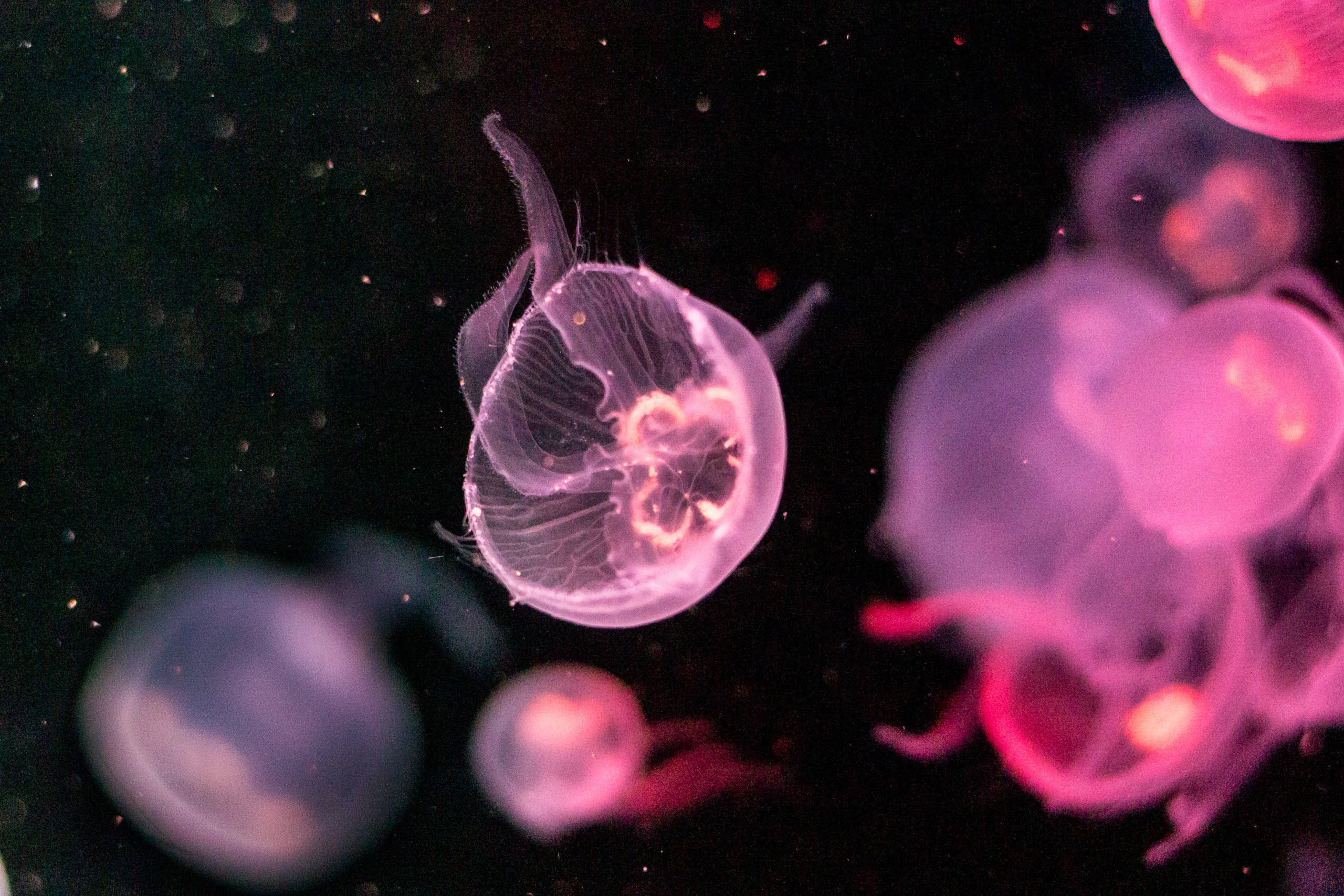
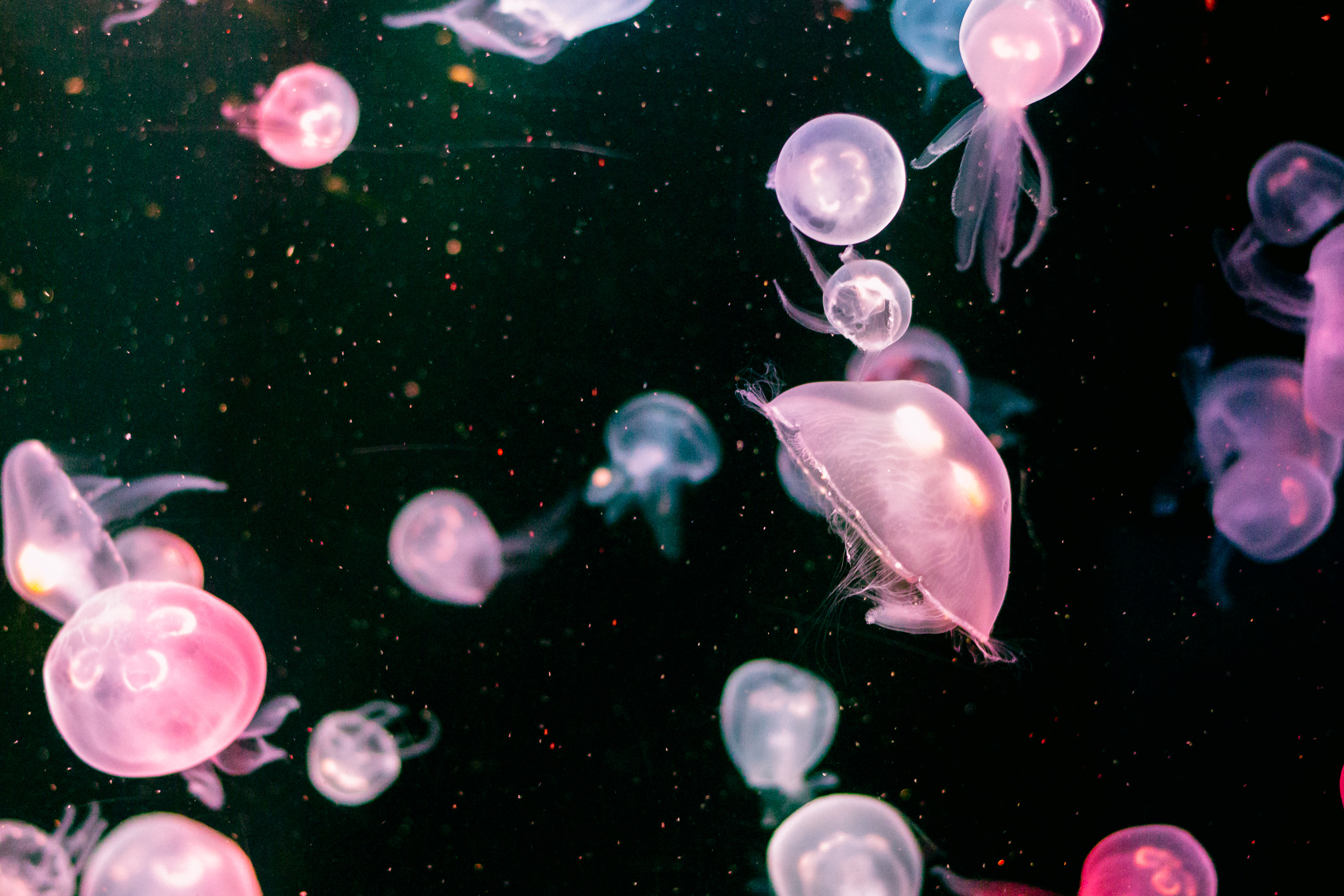
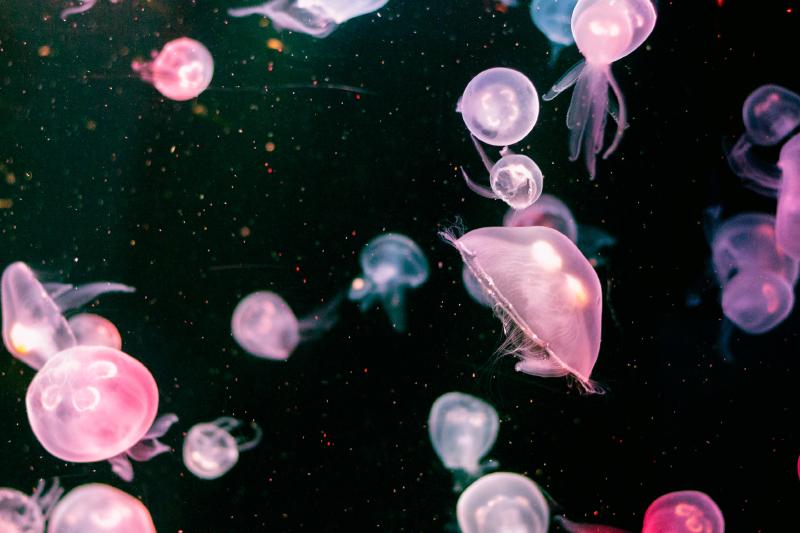
Earlier in the year I took a trip to Kelly Tarltons aquarium, and I took along my camera thinking that I would be able to get some neat shots. Sadly these were the only ones that I really liked out of the whole trip.
At that time, I only had a Canon 700d, which has very average low light sensitity. I took along my 50mm f/1.8 lens, and even cranking it wide open, I really struggled to get any decent shots. The 700d is (in my opinion) only really usable up to 6400 ISO, and even that is pushing it. In the low light environment, especially for trying to capture fast-moving fish, this proved to be quite a restrictive limit, and so I wasn’t left with many usable shots once I got home.
The other struggle was the 50mm lens on the 1.6x crop factor body. While that is great for telephoto ranges, for the indoor aquarium it was also quite limiting, as it converts to 80mm full frame equivalent.
This eventually motivated me to get a better camera, so I decided to go for a secondhand R6 and wow. The difference is crazy. Next time I go back to the aquarium I hope i’ll be able to get some much better shots with that beast.
I do like these shots though. I could have spent much longer there if there wasn’t people behind us waiting for their turn.
Boat
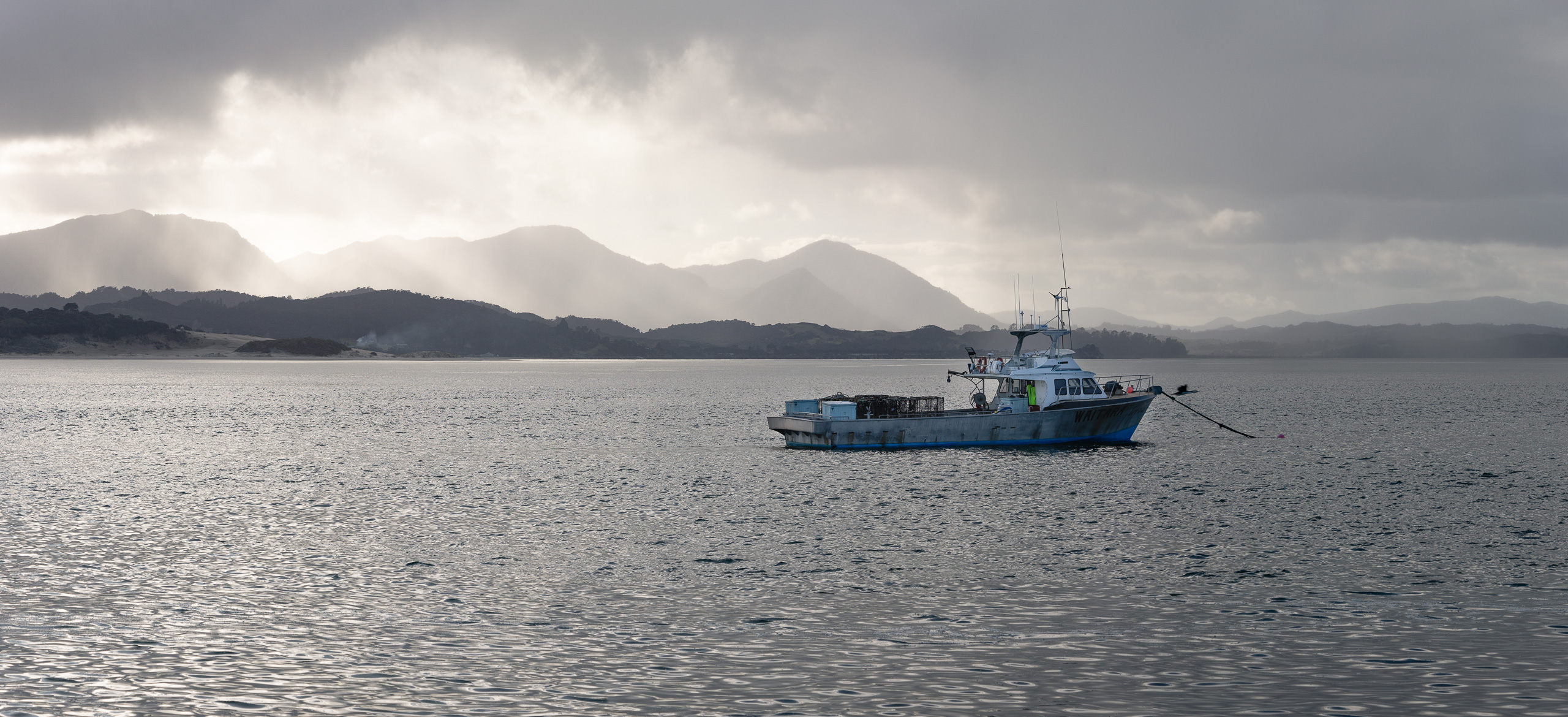
This was taken in the Opononi harbour right in the evening as the sun was going down. There were some cool light rays being produced through the gaps in the clouds that I wanted to try and grab. Because of the difference between the bright parts in the sky, and dark on the boat, this required blending multiple exposures.
I used this chance to try a HDR panorama. So all the fun of hdr shots, mixing in trying to move in overlapping arcs to allow the final image to merge smoothly.
Looking back, I think this came out okay, but I wish i’d been able to capture more of the detail and contrast in the sky. I could probably edit it a bit more to try and bring that out.
Birds
I could not have a recap of the year without including some bird photos.
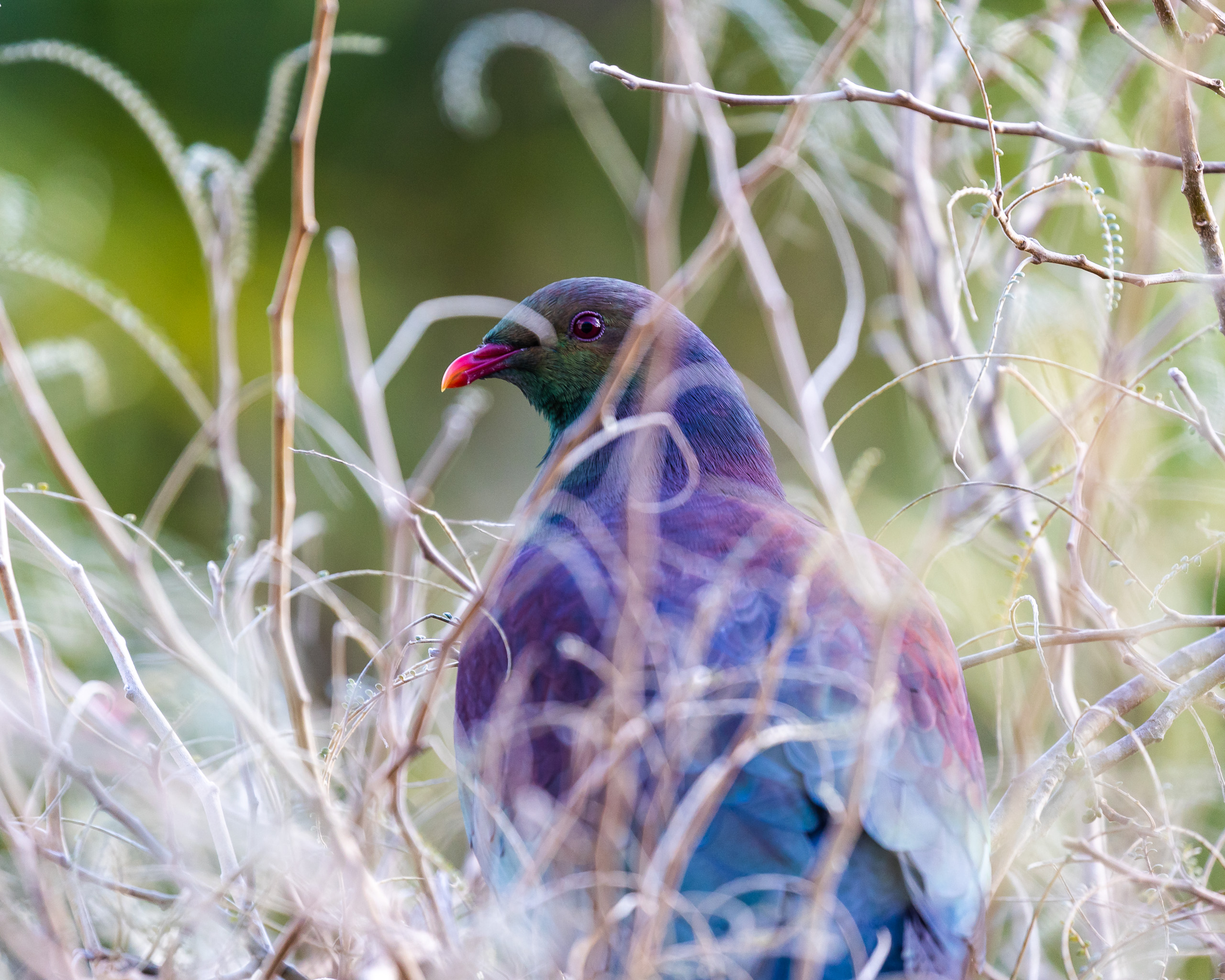
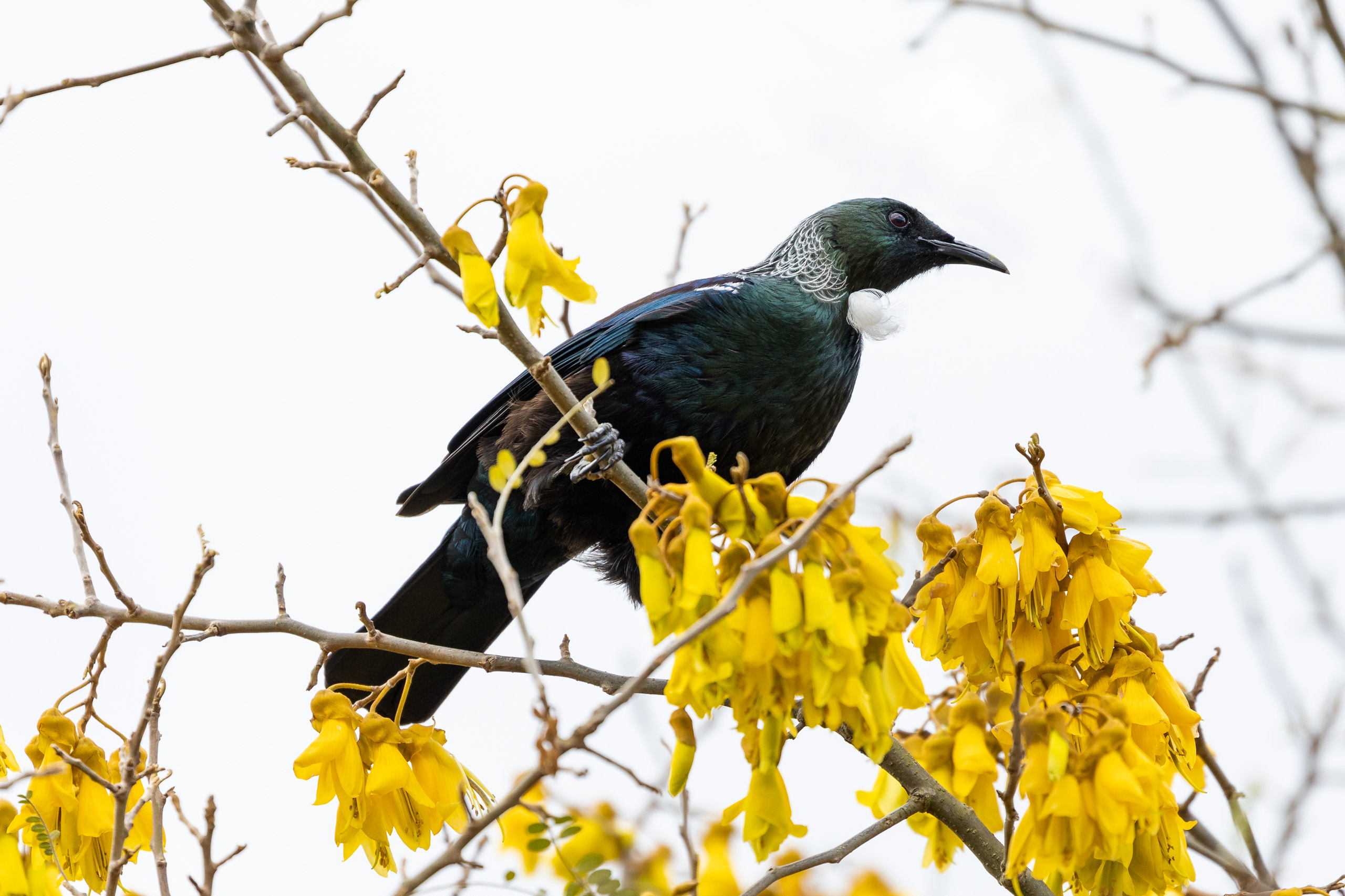
These photos were both taken with the R6, and while you can’t really see much of a difference, the ease of focusing with the eye-tracking AF really can’t be understated. It makes it much, much easier to focus on the birds, even behind the branches such as with the wood pidgeon here.
If I could change anything for these, I would try and isolate the wood pidgeon from the branches, instead of having such an overlap, especially over its head and neck. This is pretty challenging to control with wildlife though, so i’ll take what I can get. I think it’s not terrible overall, and I like the frame apart from that.
Wide-angle astrophotography
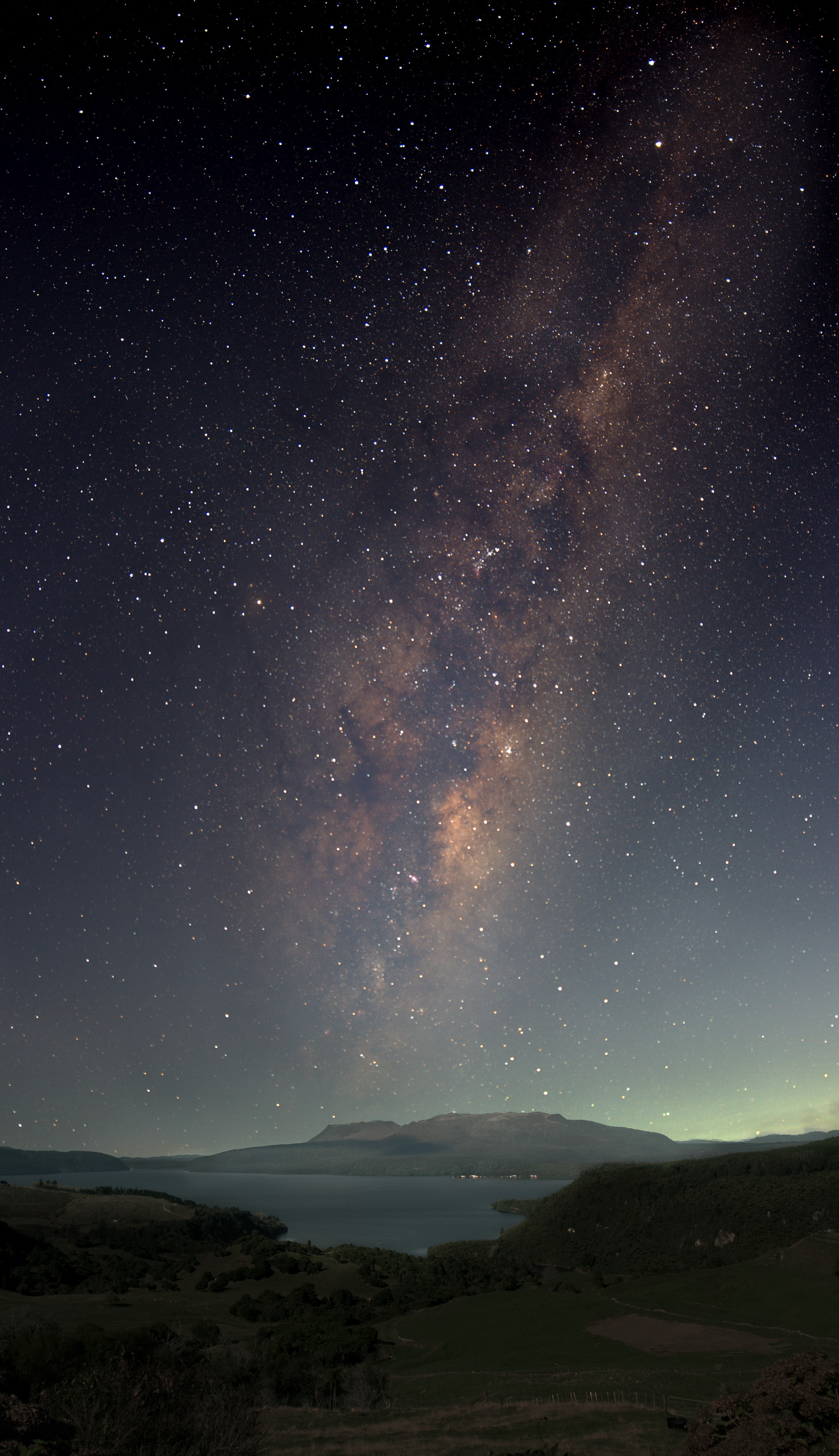
This shot was my first real forway into widefield astrophotography using a tracking mount. I took quite a few photos of the milky way, then separately took a few of Mt Tarawera in the foreground. These photos were stacked together to remove the noise and bring out detail, then combined together in photoshop to produce the final image (which is why the EXIF data is messed up in the gallery above)
I’m really happy with this as a first attempt, but looking back I think it needs more work. The stars look slightly out of focus, which is because the 14mm lens I used is manual focus, which is quite tricky to get right through either the viewfinder or using live view on the 700d - the screens are so tiny its difficult to tell. The R6 has a killer manual focus mode that helps tremendously, so this is less of an issue going forward, but still something to be aware of.
I also should probably have gotten more data for the stars - if i’d taken more photos for the stack, it would increase the total integration time, which would give more brightness and detail for the dust in the milky way. The sky also probably needs to be just a bit darker too, but that might have been more of a personal preference thing then vs now.
Deep sky astrophotography
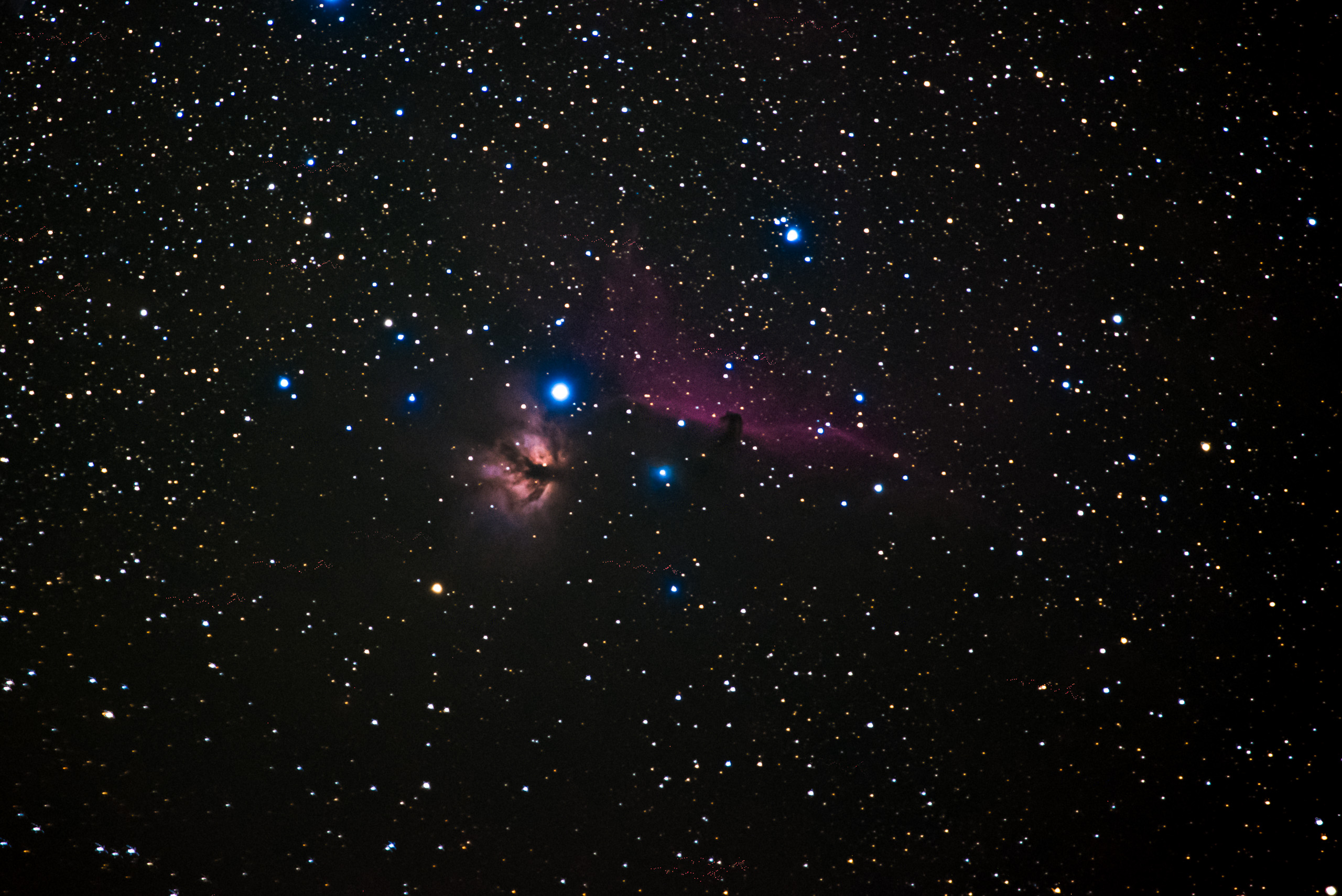
This is my first attempt at the horsehead nebula, though since the flame nebula is closeby, it also makes an appearance. If i’m being honest I was quite disappointed with this shot. I spent quite a while aligning my tracker and then spent a few hours taking shot after shot to stack together. I figured with a total integration time of about an hour, it should be plenty to get a lot of detail, like you can with the orion nebula.
Sadly, this does not seem to be the case. The horsehead nebula is smaller and dimmer than orion, and I just don’t have enough data here for a good exposure. While you can clearly make out both nebulas, they are very faint and the image is still quite noisey. To make it even worse, there seems to be several lines of hot pixel that you can see when you zoom in. I’m not quite sure why those are present here and not in the photo of orion, but because I didn’t take any compensation dark frames, there’s no way I can correct for it easily which is a big bummer.
This frame shows off the one downside of the R6 compared to a crop sensor, which is the lack of crop factor. A 400mm lens such as was used here is equivalent to a 640mm lens on a crop factor, which gives you quite a bit of extra zoom for more detail. There isn’t a lot I can do about this without geting a telescope though, sadly.
I’ll chalk this one up as a good learning experience, and next time I go out hopefully i’ll be able to make a more successful attempt.
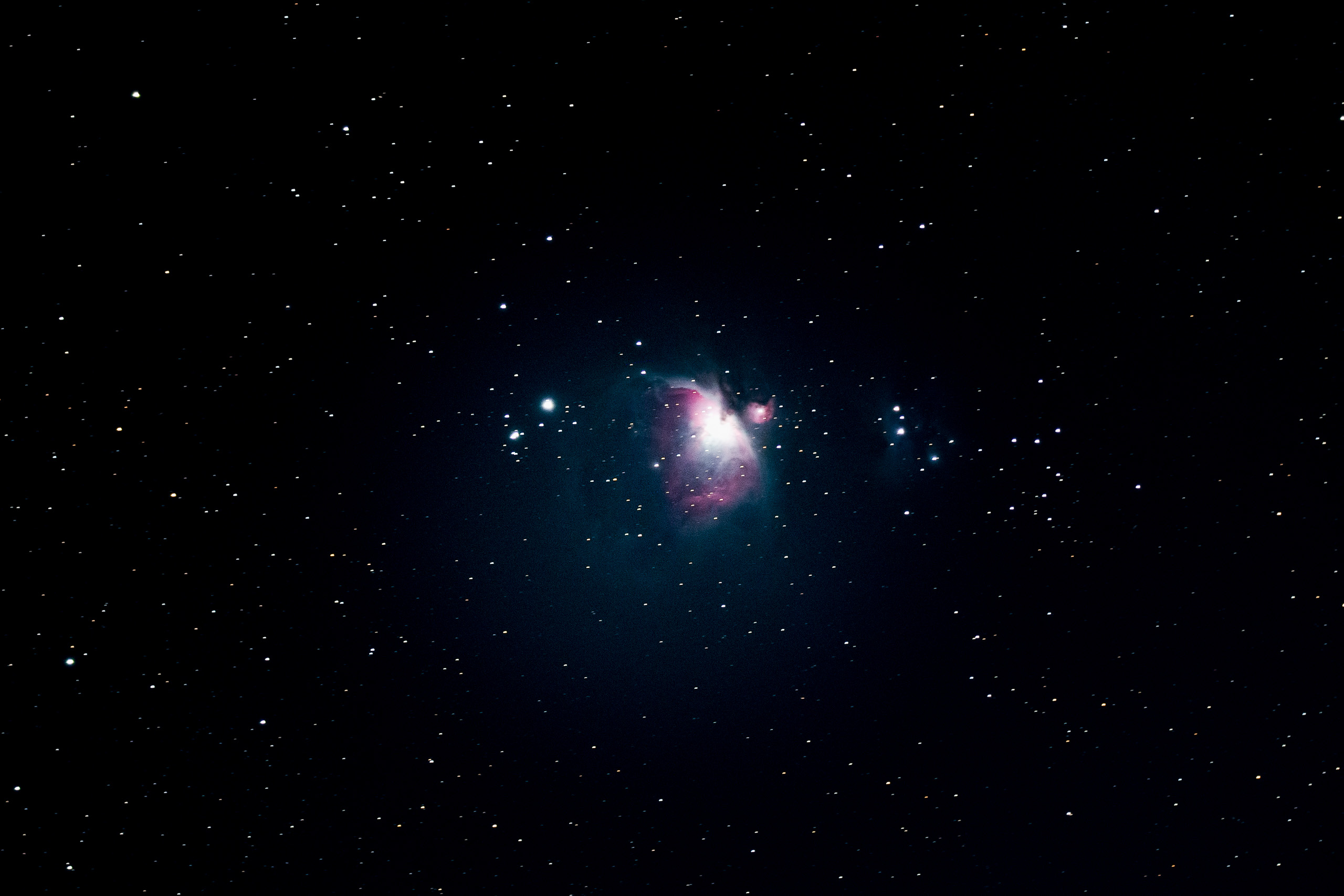
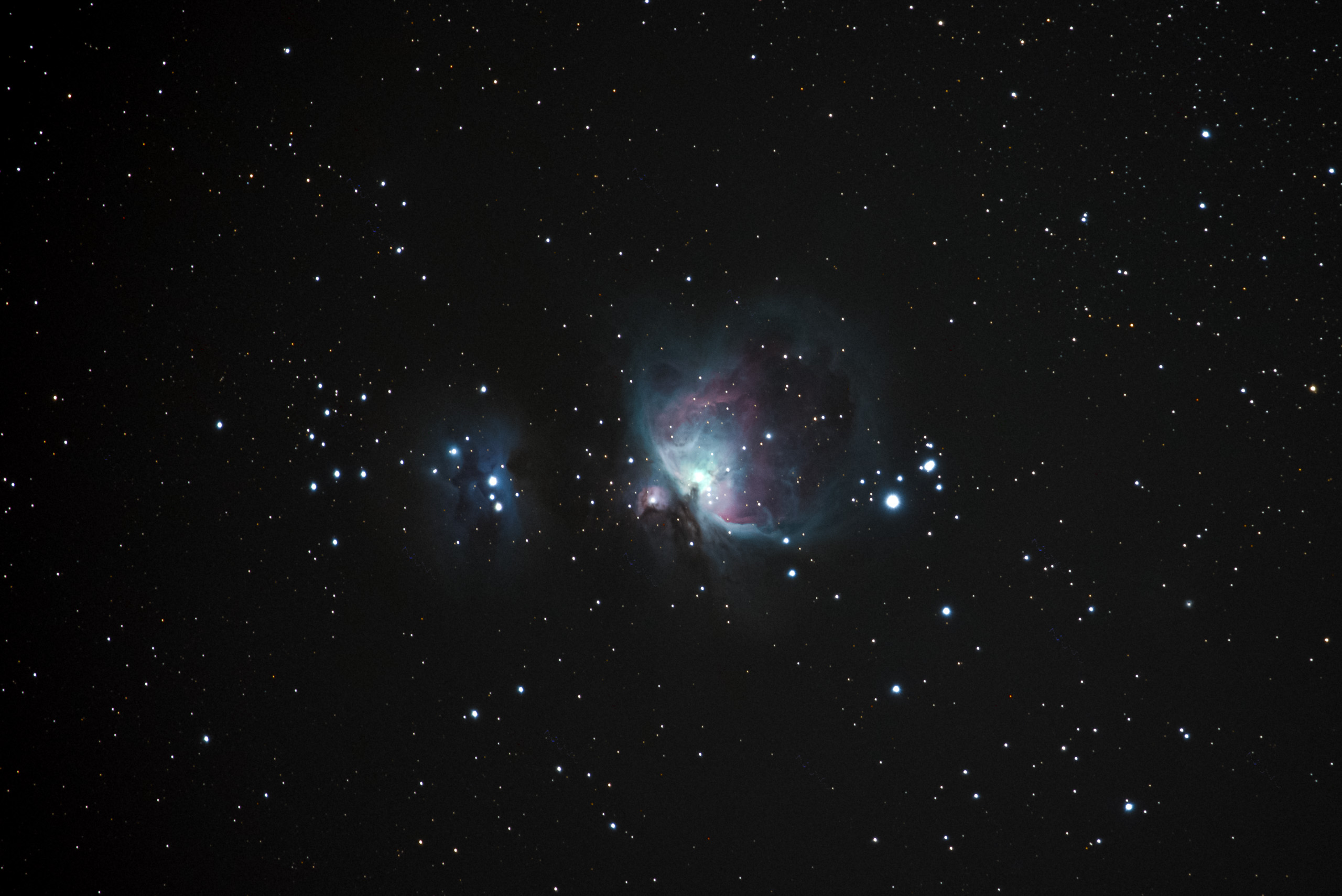
This shot I was much happier with. The first photo is my first attempt at orion. As you can see, the center is blown out, with all the detail inside being lost, as well as a small amount motion blur on the stars, probably because the tracker wasn’t aligned properly.
In the second shot, I managed to fix these issues. The stars are crisp pinpricks, with no trailing from motion blur and the center of the nebula is clearly visible with all the extra detail in there on display.
To do this, I attempted HDR for the stack, where I took some extra photos at shorted shutter speeds to expose correctly for the center. This allowed me to capture the detail inside and combine it with the dimmer outer edge successfully to make the final image where both levels are brightness are visible.
For the next attempt, i’d like to further increase the total integration time to really get some good data for the much dimmer outer edge, which you can faintly see on the right side in a loop.
But overall, i’m really happy with this shot. I can’t wait for the third attempt.
And well, there you have it. My some of my favourite shots that I took this year. I feel like this year I really grew in experience as I got more used to my gear, and got some needed upgrades. With any luck I can continue to learn on the same trajectory this coming year, and hopefully my recap this time next year will be even better!