Easter was the first chance i’d had to get out and take some photos since I got the new camera, so I was quite eager to get into it. Click the photos to embiggen them.
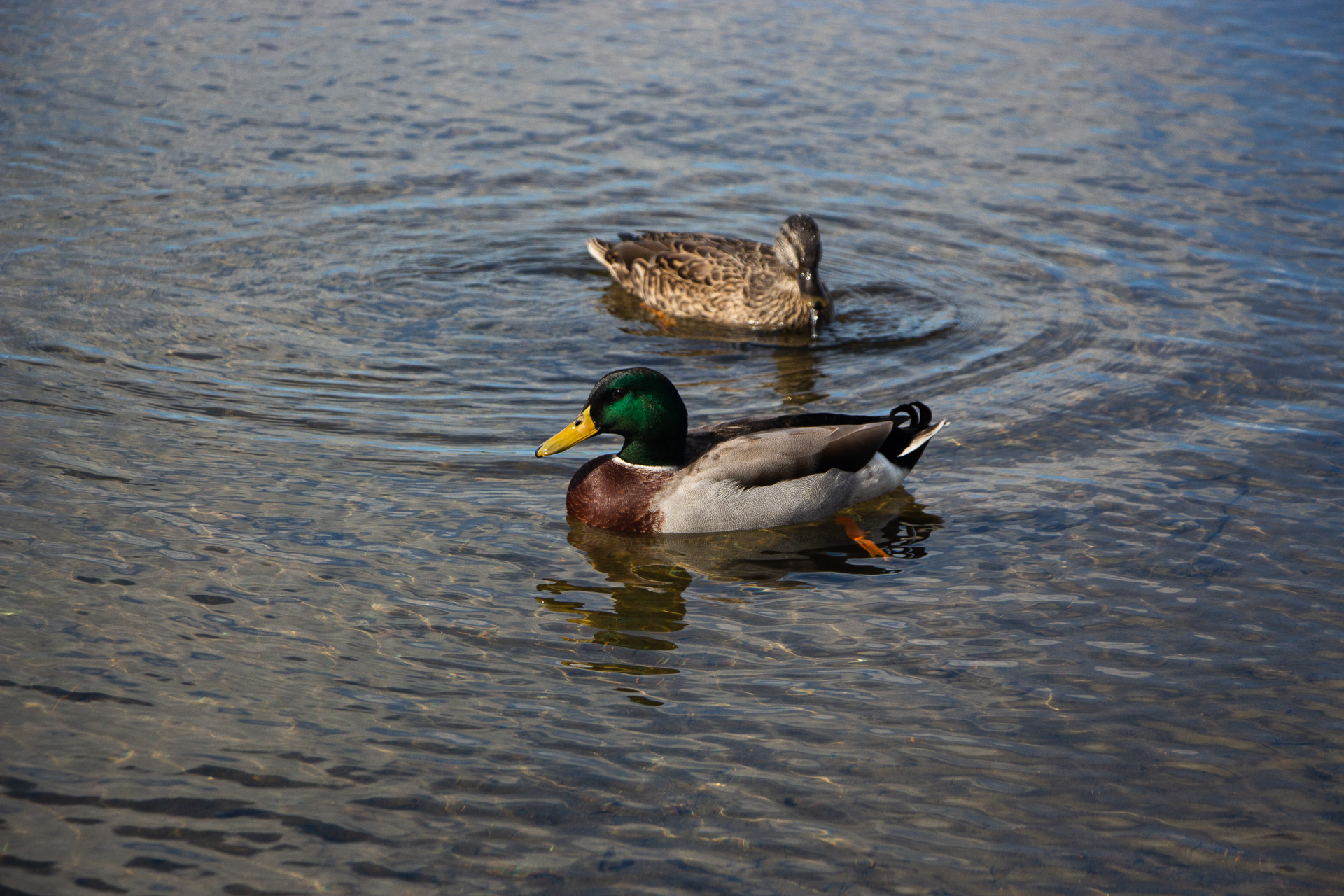
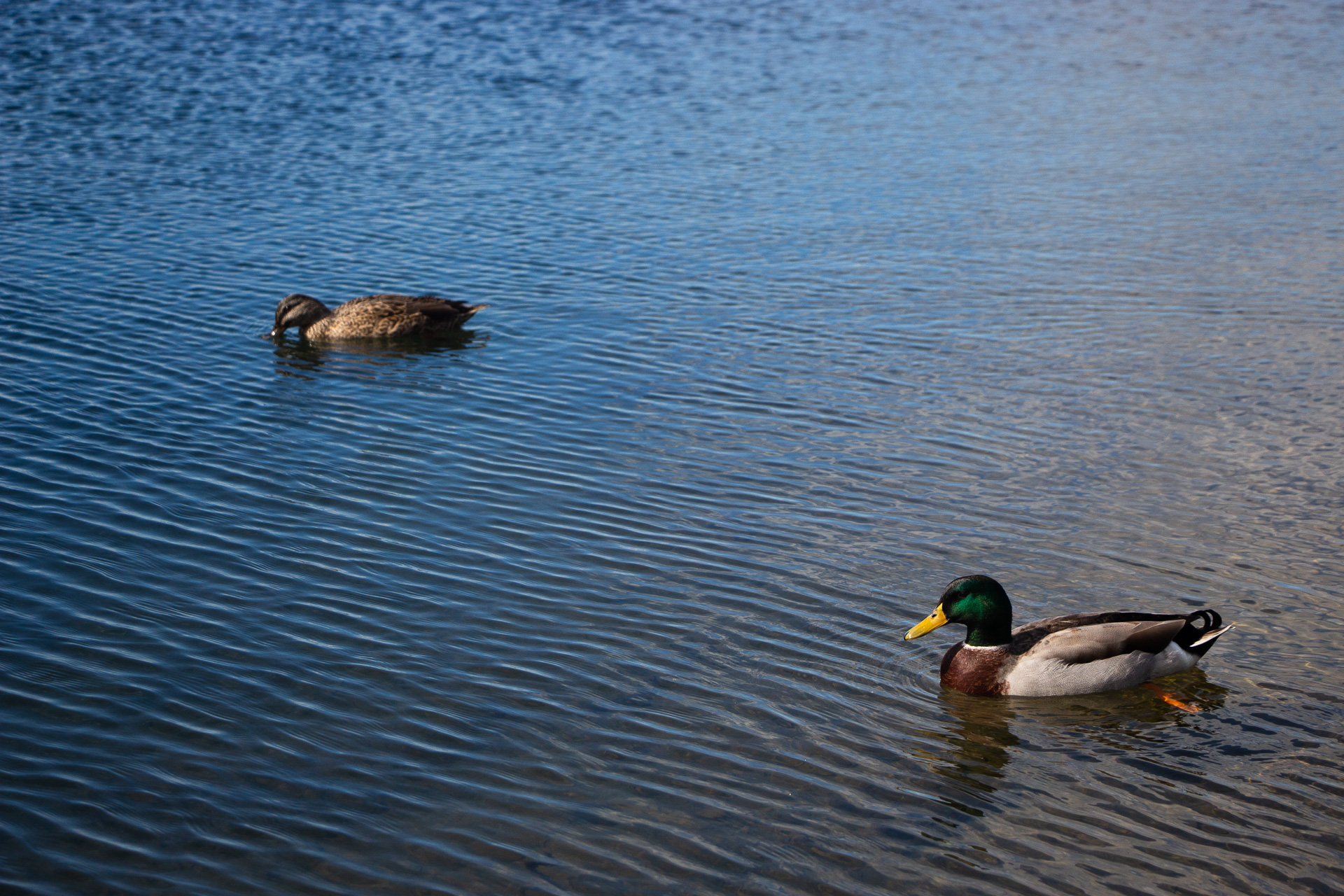
Ducks
These first two were just plain old ducks - nothing too interesting, but they were a good way to start getting used to the camera and how to use it properly
Raft
I wish this one had come out a little bit better, but it was the best I could manage with the lens I have.
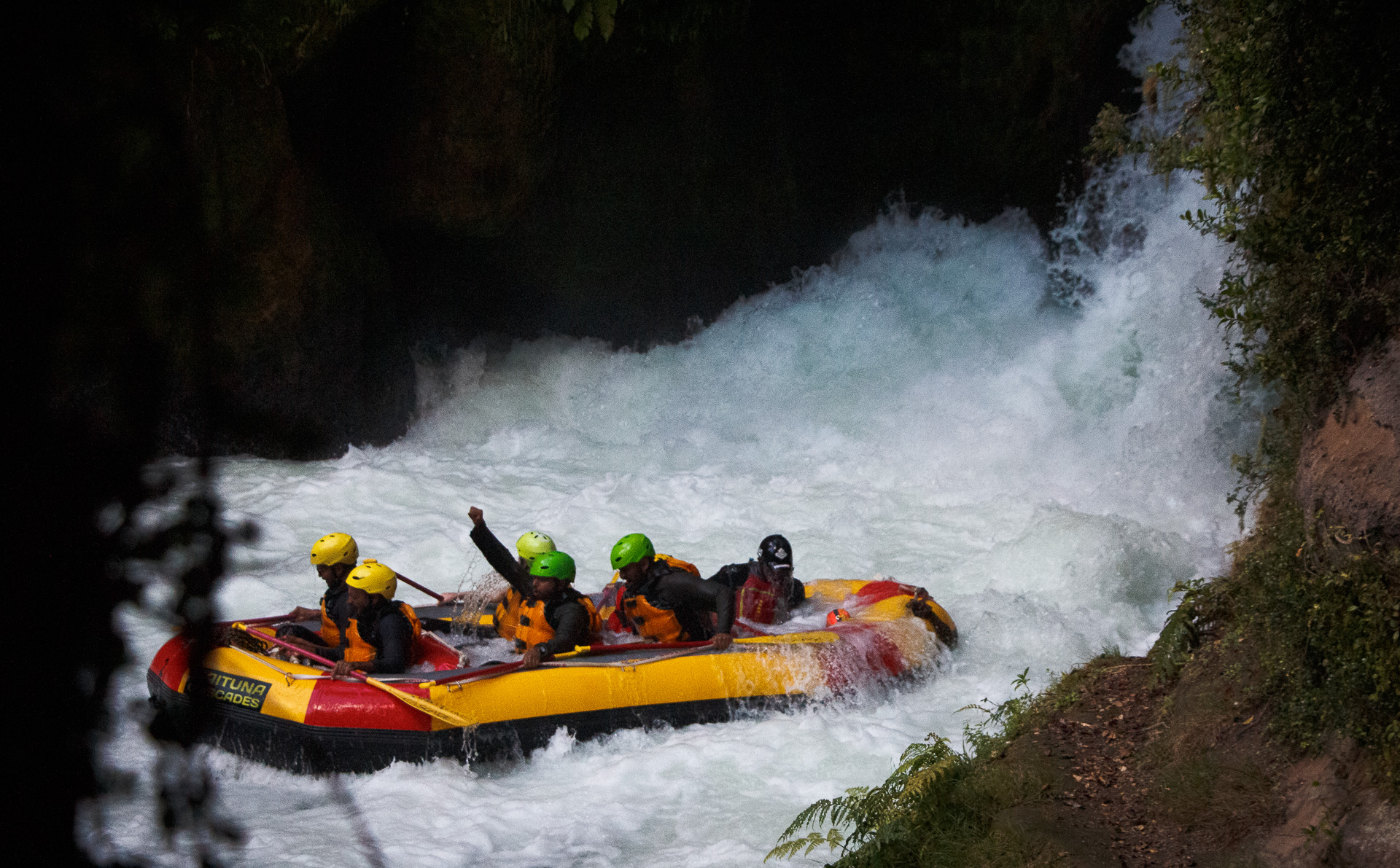
I learned a lot from shooting these rafts. Because the whole area was covered by trees and had otherwise relatively dim light, I really struggled to get the shutter speed fast enough to eliminate the motion blur while keeping enough light for the rafters and even the water to be properly lit. I tried a bunch of different combos of ISO and shutter speeds to find something workable, but I couldn’t ever manage something that was light and with a fast shutter speed. I eventually resorted to pumping up the ISO to 1600, which has caused a little bit of noise that you can see in the darker water in the background. This wasn’t ideal, but with only an f/5 max aperture at that focal length, that was pretty much all I could do with a moving subject.
I think to improve it, I really needed a lens with a wider aperture, in order to capture more of the available light without having to raise the ISO and introduce the noise artifacts
The other thing that tripped me up a lot was the autofocus. Many of these shots ended up focusing on the wrong part of the frame, which I didn’t notice at the time because its hard to tell on the small camera screen.
In terms of composition, i’m fairly happy with it. I really like the raised fist, in my opinion it really captures the spirit of challenge and exhiliration that the rafter must have been feeling at the time.
Sunset
These next three photos were the result of madly biking up the trails of the Redwoods to make it in time to get a good sunset photo. We kinda missed the light for the position that I really wanted to get, but I think these ones came out ok as well.
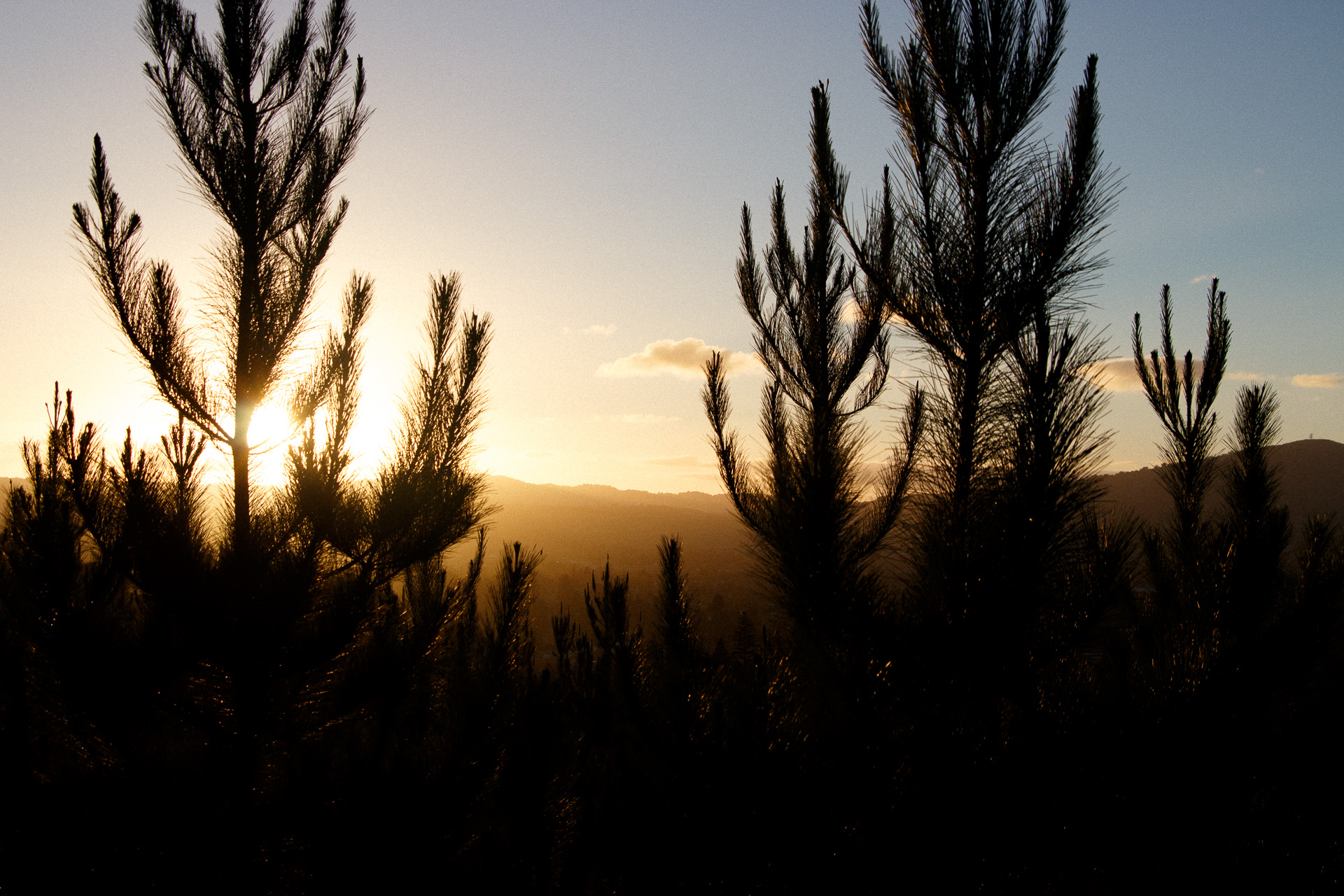
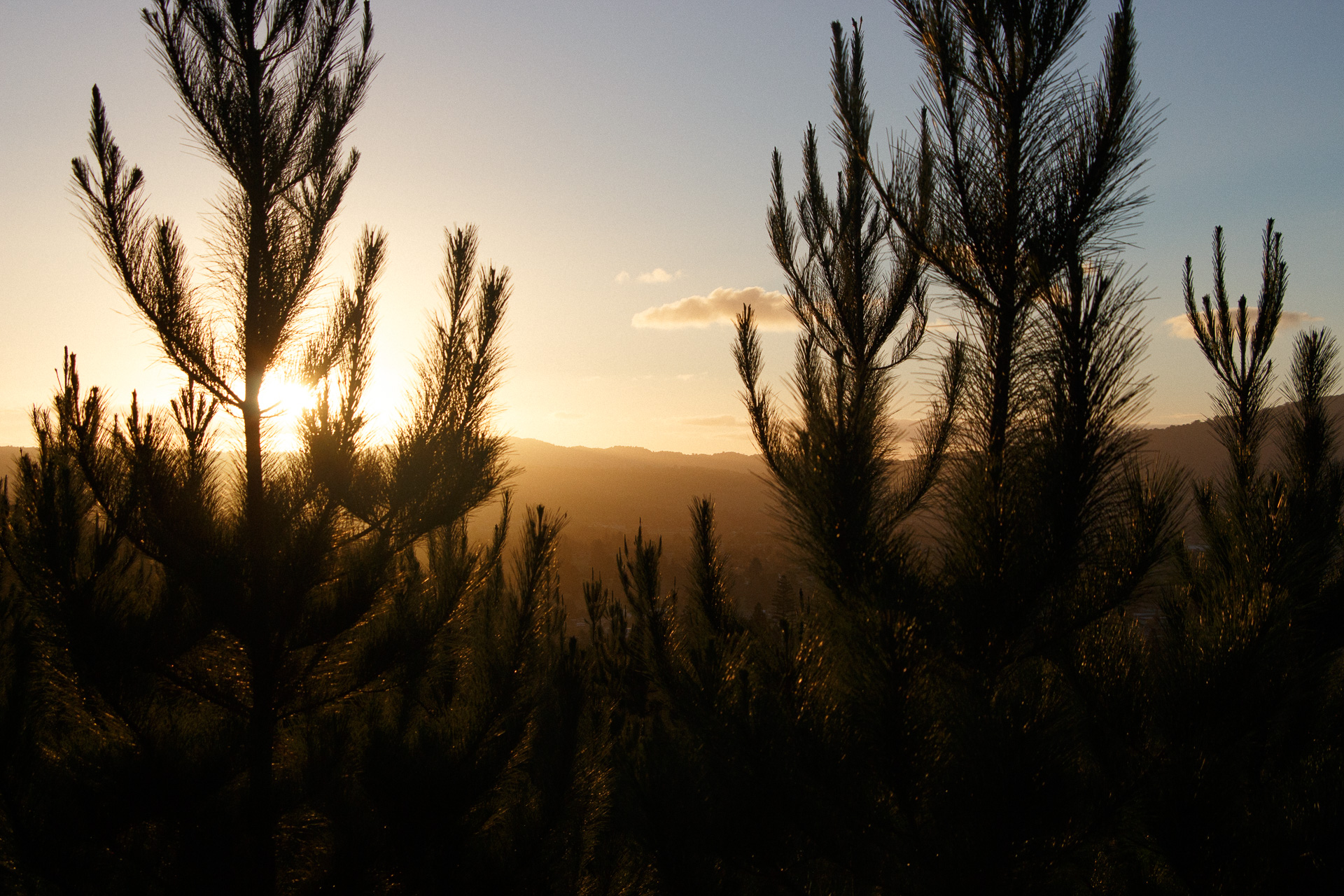
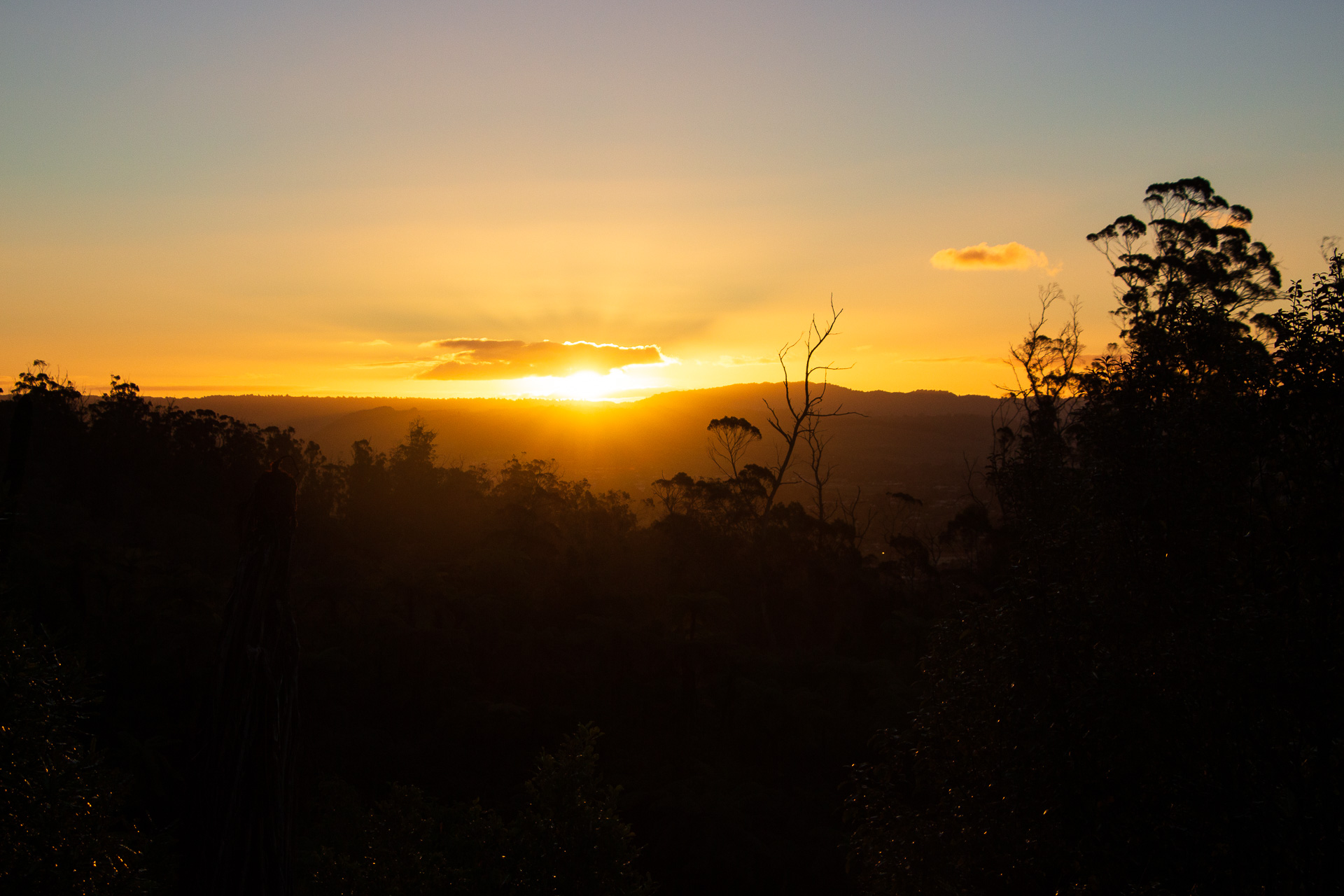
These were basically just me scrambling to try and get something halfway decent while trying to catch my breath and not sweat all over the camera before the sun went down completely. The pine trees in the foreground kinda inspired a stuck in time ‘western’ feel in my eyes - almost like what you would get from a polaroid snapshot in the 90s as you drove through a pine forest, but I don’t know if the final product is really all that compelling. The same goes for the next sunset photo.
Shooting into the sun like that is hard though. I think I probably just needed more time to find a good spot to take the photos where I could take a bunch more without trying to rush to get the next ones.
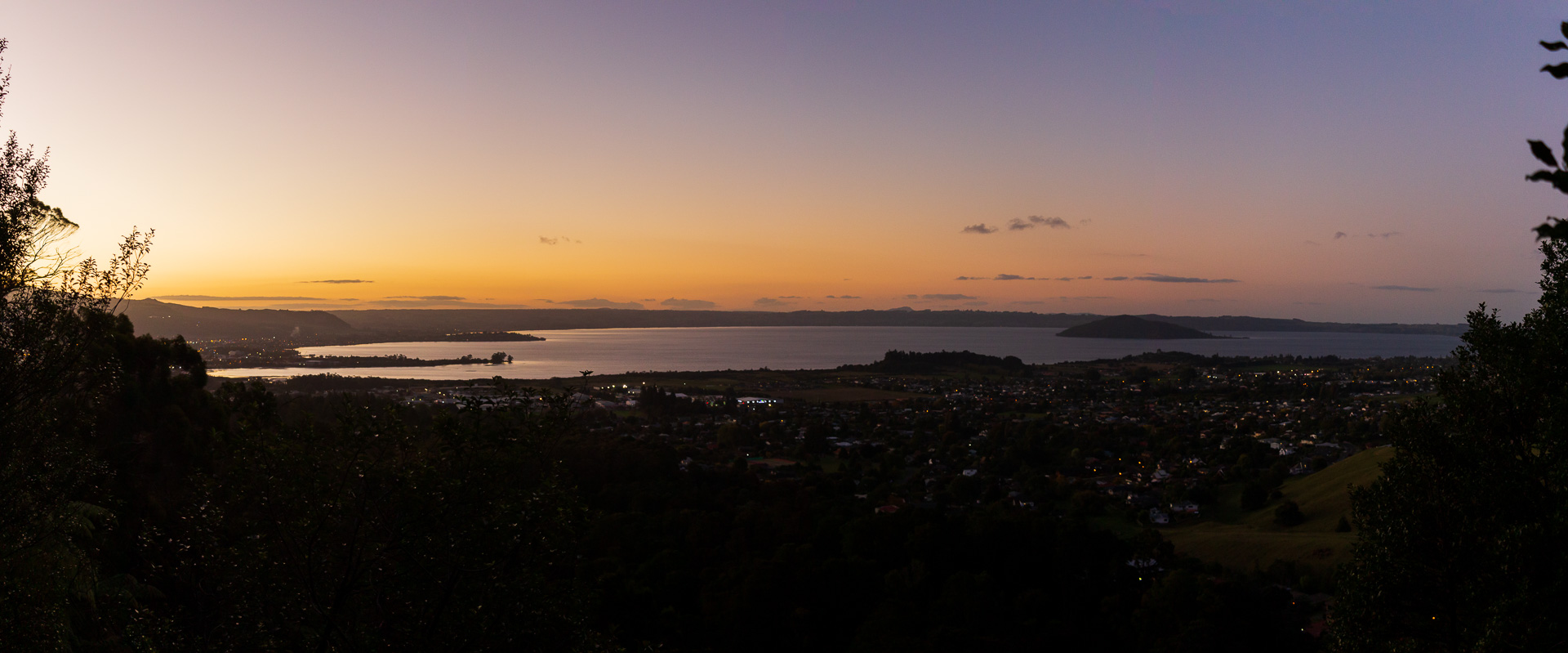
The panorama I thought turned out pretty well, considering I was still pretty puffed, had no tripod and was racing the sun before the light went completely. This was taken by stitching together 7 or 8 photos in Lightroom. I’m very impressed with how good a job lightroom did, you can’t even see the seams of where the photos join together. I like the colours on display, even though the sky got a little bit blown out where the sun was. It would be nice if you could see a little bit more of the lake on the right to balance out the photo, but overall, I think its acceptable.
Focusing was an issue once again, as many of the photos I took for this pano ended up being useless because the camera locked onto a bush in the foreground instead of the background like it should have been.
I think this really needed a tripod in order to improve it. Then I could have gotten more light without hitting the blur issues from the shutter speed being too slow to deal with my exercise hand shakes. This was 1/80 f/4.5 35mm, so a tripod means that I could have slowed down the shutter a bit more to compensate for the slower lens. But there was no way I would have been able to carry it and bike down the hill again in the dark.
Astrophotography
Astrophotography is something that i’m really keen to spend more time on, its very satisfying seeing the final image pull stars out of nowhere as you stack together all the separate photos.
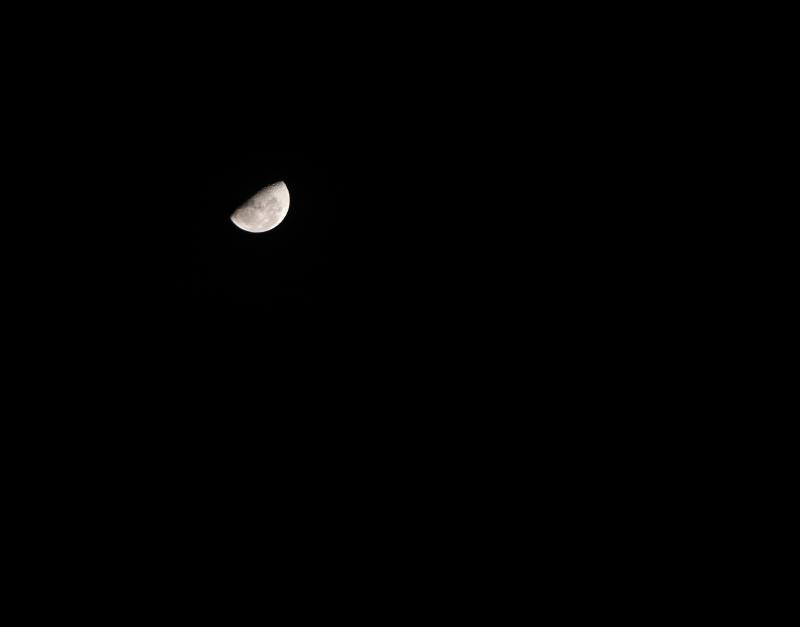
The only really decent shot I got was the moon.
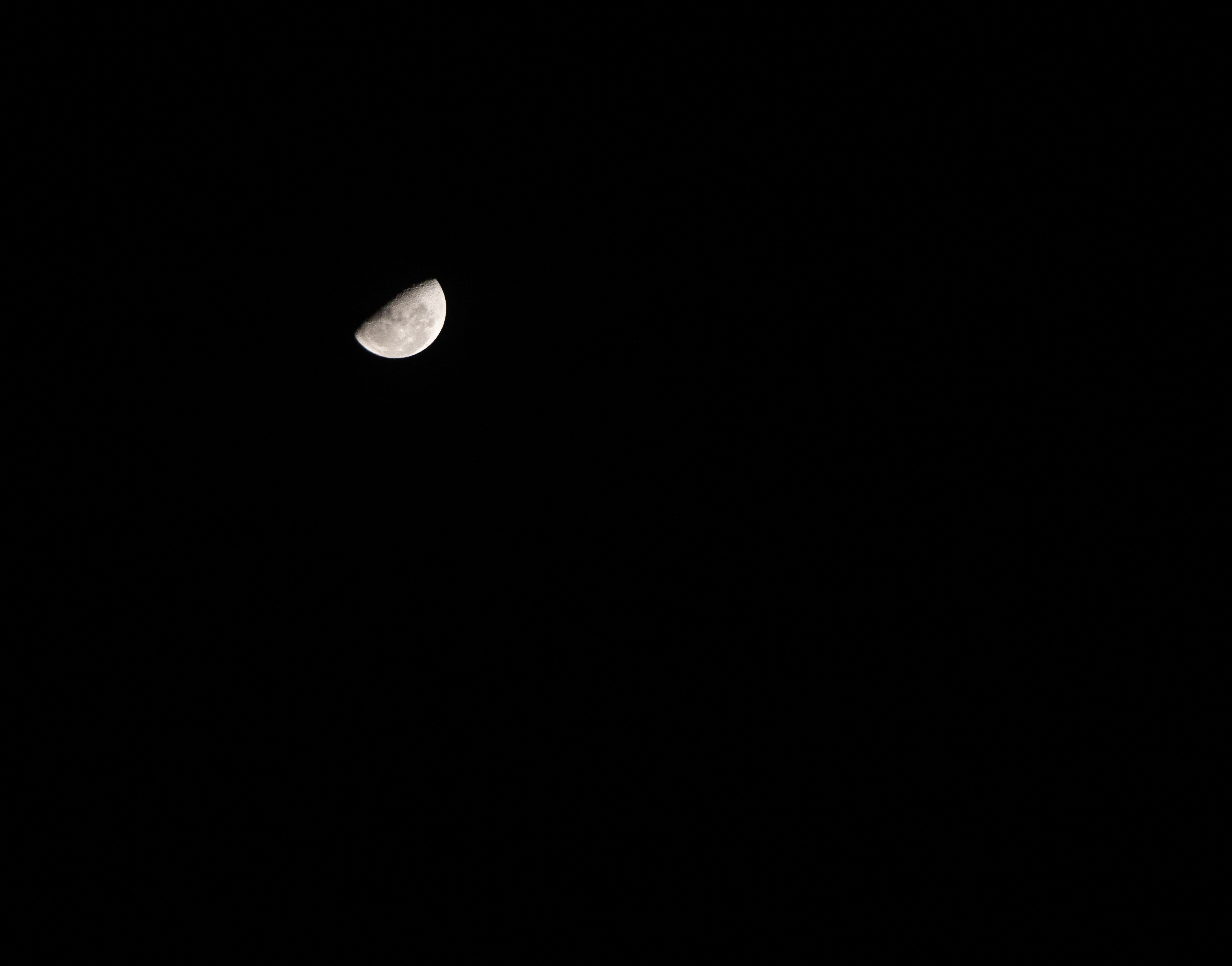
While not terribly interesting, it was good practice exposing it correctly and pulling a good image out of it. You can juuuust make out the craters on the surface, which is super cool considering this was just from an entry level DSLR without a telescope or any other magnification. This is technically an HDR shot as it came from three stacked together, but I don’t think you really need to do that when you aren’t using a telescope to get more detail.
The other astro shot I got was one of the Southern Cross, which you can see in the lower left side of the photo:
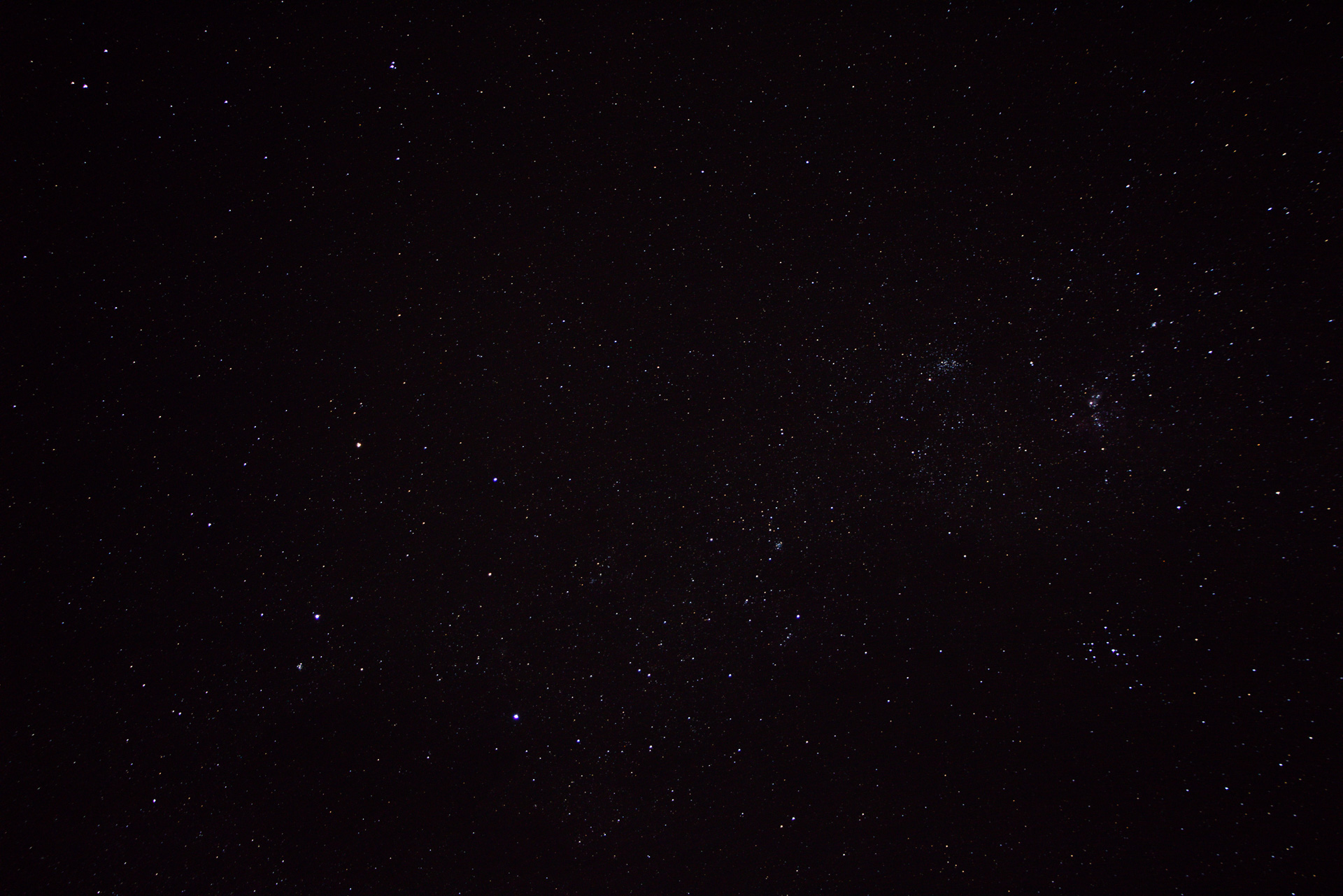
This shot has nothing interesting really, but compared to the source images, its amazing to me how much information the computer can pull back out. This was made by stack 10 images each taken for 10s together using DeepSkyStacker. In my next attempt at astro i’ll try take 45 source images instead of 10, and i’ll see if I can find a more interesting foreground to place it against. I’d like to nail a shot of the milky way, since I won’t be able to see any cool Deep space objects without a telescope.
Focus was actually a big issue here, as you can see if you zoom in. The stars are very slightly out of focus, because again I couldn’t see on the tiny little camera screen. Next time i’ll try get around this by using some software to control the camera for the images, which includes a focusing helper. But more on that another time if it’s successful.
Conclusion
Overall, I know I have a lot to improve on, but I think this was a fairly successful first outing. I managed to learn the functions of my camera, and found some basic things to be aware of to try to improve on next time. These include:
- Focus
- Using the single point AutoFocus might give better results, since it won’t be possible to focus on the foreground accidentally.
- Using back button focus - This is an experiment to see if focus lock using the back button works better than a half press from the shutter. I’ll write more later after I trial it.
- Shutter speed
- Making sure the shutter speed is fast enough to prevent blur from my hands shaking is crucial. The stabilisation of the lens can only do so much.
- Speaking of, allowing time for the lens to stabilise is important too
- ISO
- Don’t be afraid of bumping it up to 1600, you can always reduce the noise in post-processing a little bit. Its better to have a little noise, than motion blur because the shutter was too slow.